

-
1 пораньше
General subject: early doors ("She had a bad cold, and retired to bed early doors"), early -
2 вход на галёрку и задние ряды партера
Theatre: early doorsУниверсальный русско-английский словарь > вход на галёрку и задние ряды партера
-
3 вагон
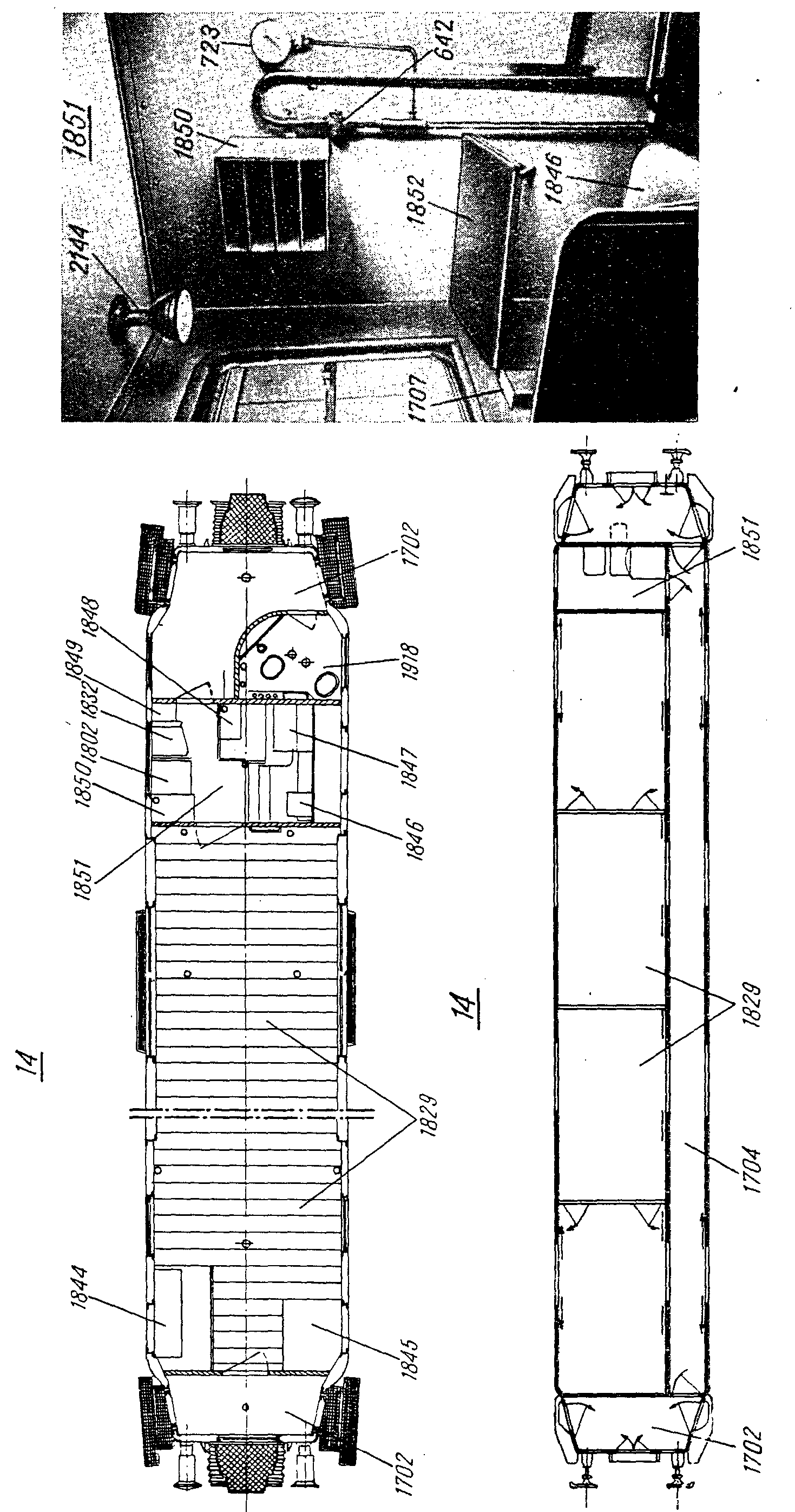
m—FRA fourgon m à bagagesDEU Gepäckwagen mENG brake, or luggage vanITA bagagliaio mPLN wagon m bagażowyRUS багажный вагон mсм. поз. 14 на ,
, 
бункерный вагон для перевозки пылевидных грузов
—FRA wagon-réservoir m à pulvérulents ou wagon-silo mDEU Silowagen mITA carro m serbatoio per merci in polvere o carro-silo mPLN wagon m zbiornikowy do towarów sypkichRUS бункерный вагон m для перевозки пылевидных грузовсм. поз. 57 на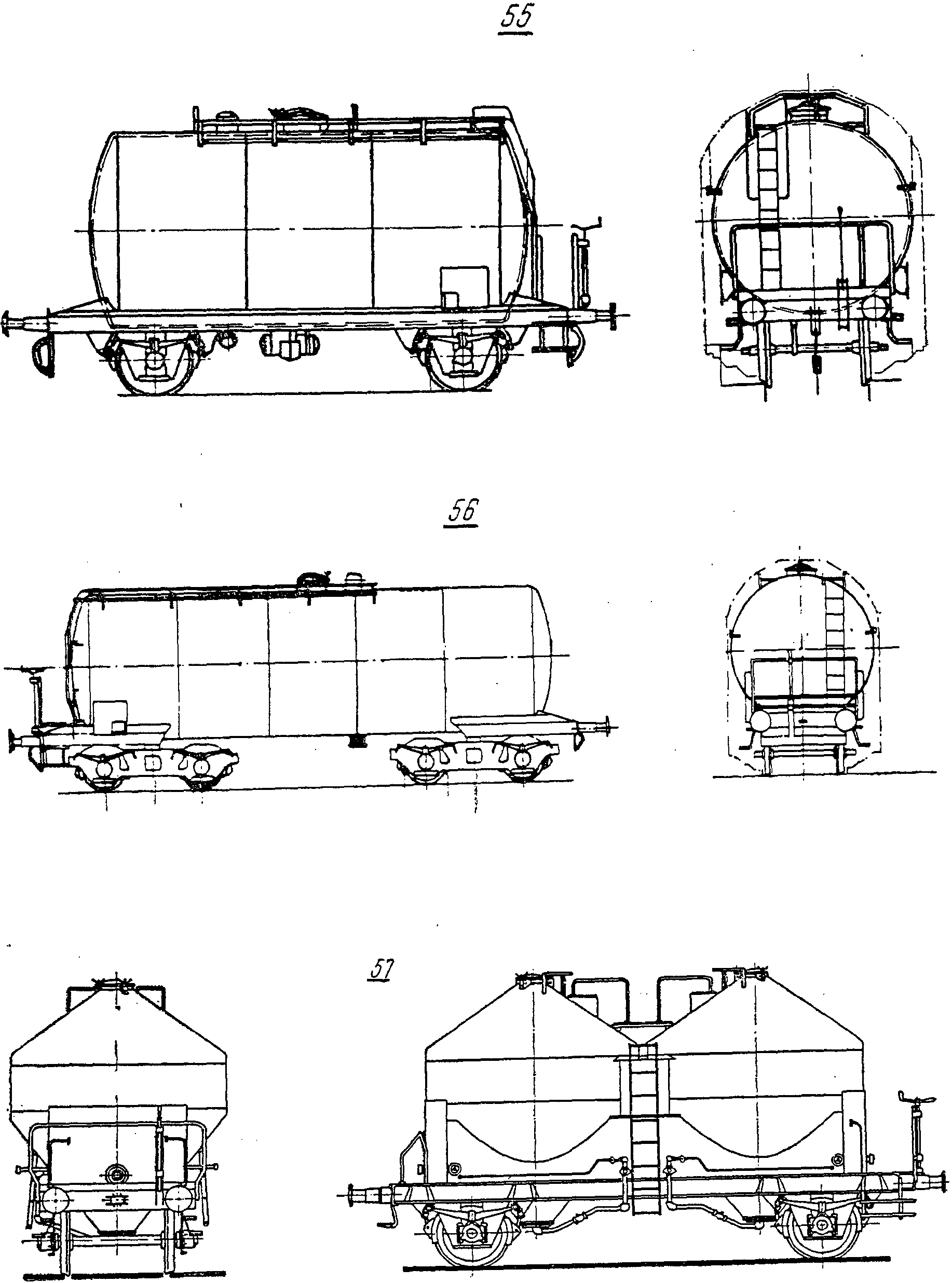
вагон для обозрения окрестностей
—FRA voiture f panoramiqueDEU Aussichtswagen mENG observation carriage or coach, dome carITA carrozza f panoramicaPLN wagon m osobowy do obserwacji okolicy, widokówRUS вагон m для обозрения окрестностейвагон для перевозки мелкого скота и домашней птицы
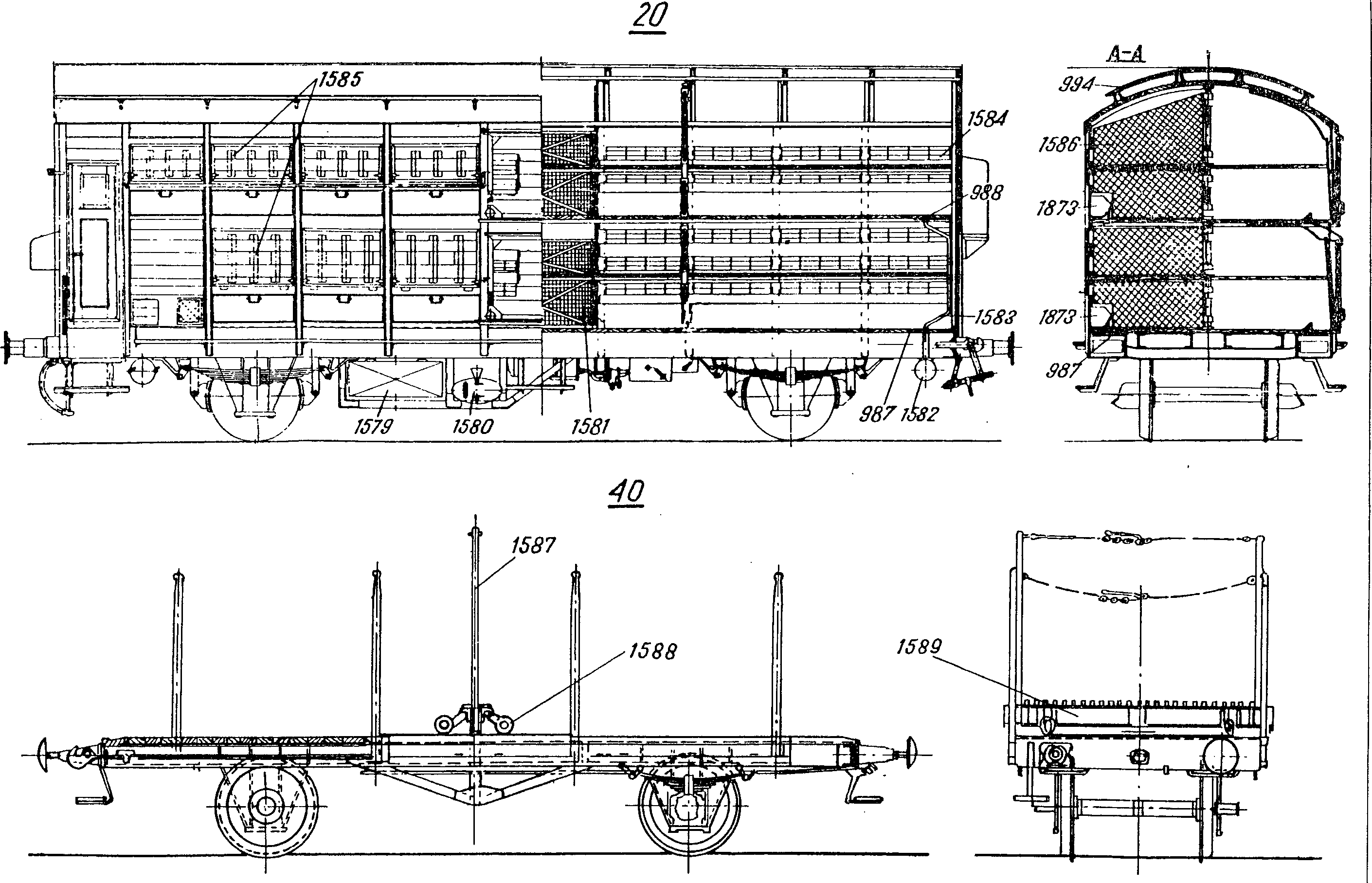
—FRA wagon m couvert avec parois à claire-voie pour transport de petits animauxDEU Verschlagwagen mITA carro m coperto con pareti a giorno per trasporto (di) animali piccoliPLN wagon m kryty do przewozu małych zwierzątRUS вагон m для перевозки мелкого скота и домашней птицысм. поз. 20 на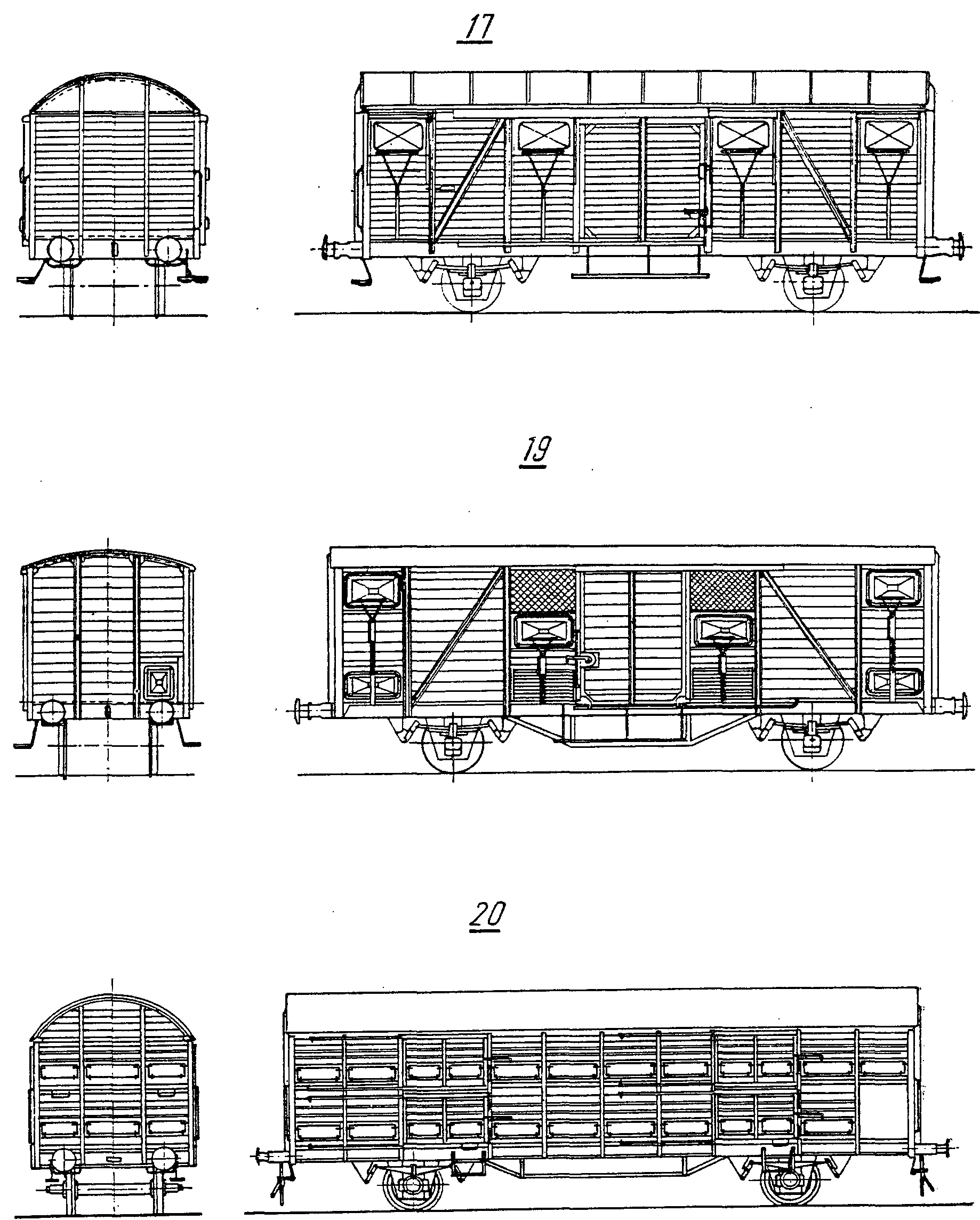 ,
, 
вагон на рельсово-безрельсовом ходу
—FRA wagon m rail-routeENG rail-road wagonITA veicolo m strada-rotaiaPLN wagon m kolejowo-drogowyRUS вагон m на рельсово-безрельсовом ходусм. поз. 2674 на
вагон с крышей из складных панелей
—FRA wagon m à toit ouvrant par panneaux coulissantsDEU Wagen m mit FaltdachITA carro m a tetto apribile mediante pannelli scorrevoliPLN wagon m z dachem składanymRUS вагон m с крышей из складных панелейсм. поз. 51 на ,
, 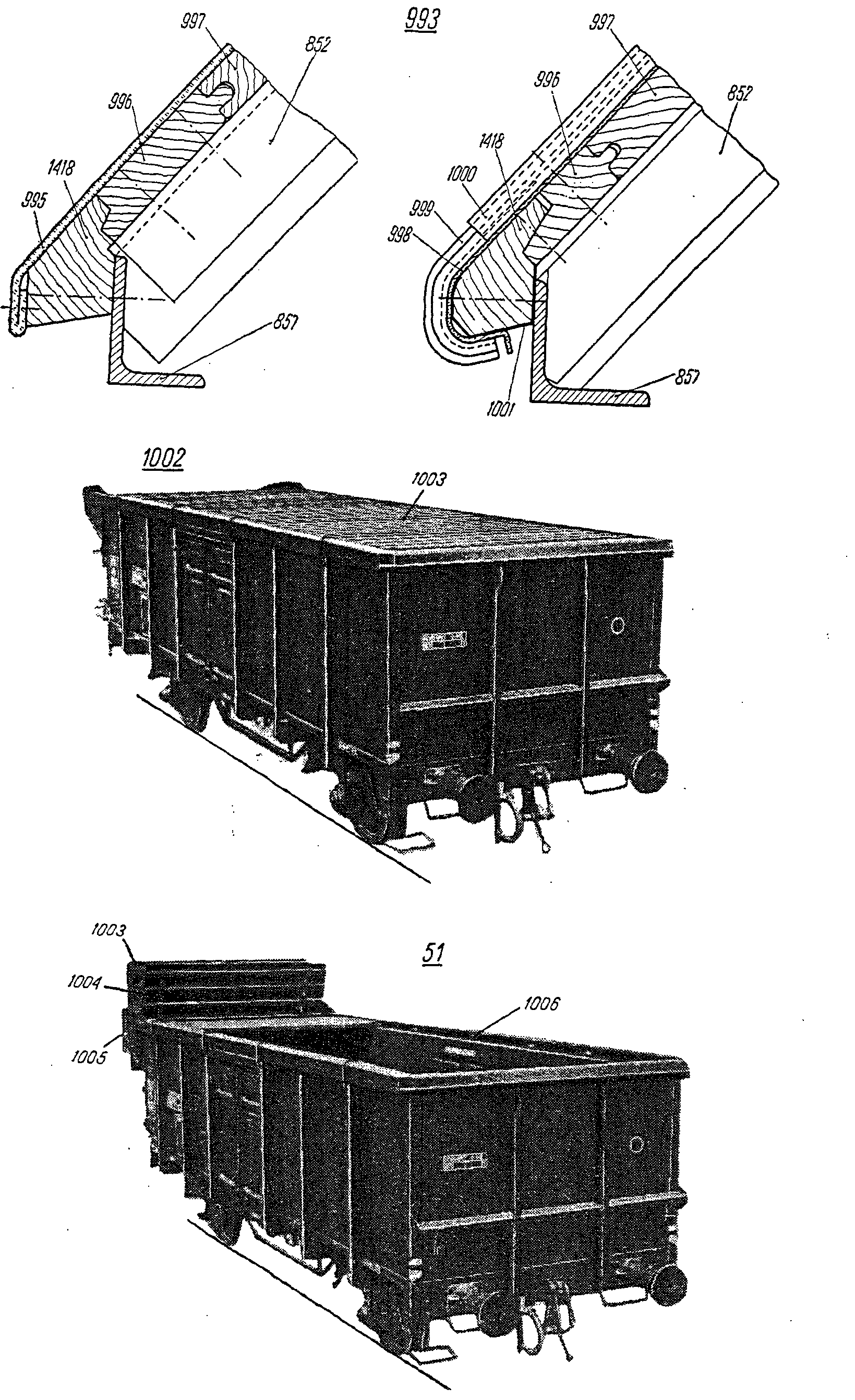 —FRA wagon m à toit ouvrant par secteurs pivotantsDEU Wagen m mit SchwehkdachITA carro m a tetto apribile a settori girevoliPLN wagon m z dachem dwustronnie odchylnymRUS вагон m с откидной крышейсм. поз. 52 на,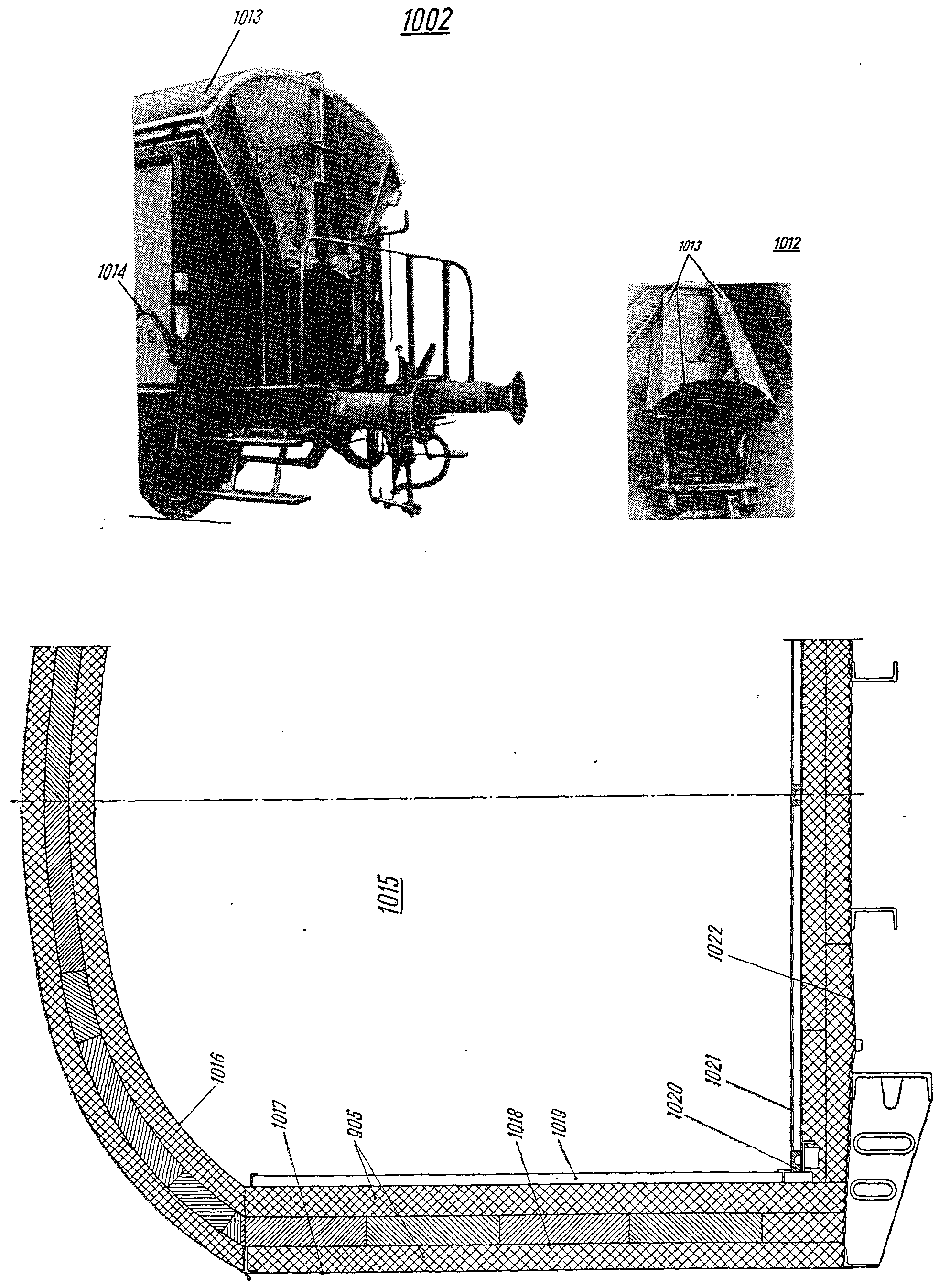
вагон с раздвижной крышей (с раздвижными стенами или без них)
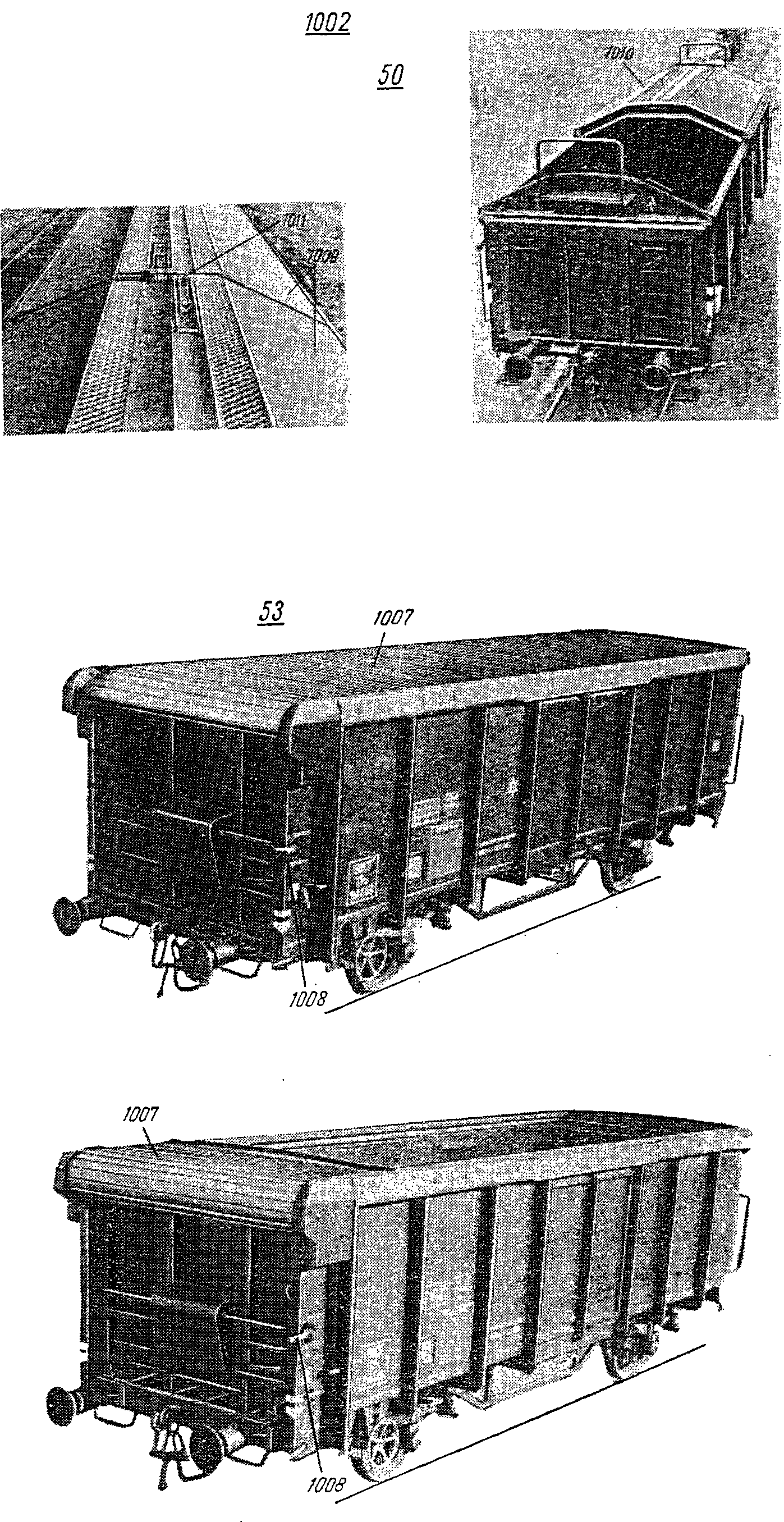
—FRA wagon m à toit ouvrant coulissant (avec ou sans faces coulissantes)DEU Wagen m mit Schiebedach (mit oder ohne Schiebewände)ENG wagon with sliding roof (with, or without, sliding doors)ITA carro m a tetto apribile (con o senza pareti scorrevoli)PLN wagon m z dachem przesuwnym (ze ścianami przesuwnymi lub bez nich)RUS вагон m с раздвижной крышей (с раздвижными стенами или без них)см. поз. 50 на,  ,
, 
вагон со свертывающейся в рулон крышей
—FRA wagon m à toit ouvrant enroulableDEU Wagen m mit RolldachITA carro m a tetto avvolgibilePLN wagon m z dachem zwijanymRUS вагон m со свертывающейся в рулон крышейсм. поз. 53 навагон спальный с одноместными купе
—FRA voiture-lits f à compartiments à 1 placeDEU Einbettschlafwagen mITA carrozza f letti a compartimenti monopostoPLN wagon m sypialny z przedziałami jednoosobowymiRUS вагон m спальный с одноместными купесм. поз. 1777 на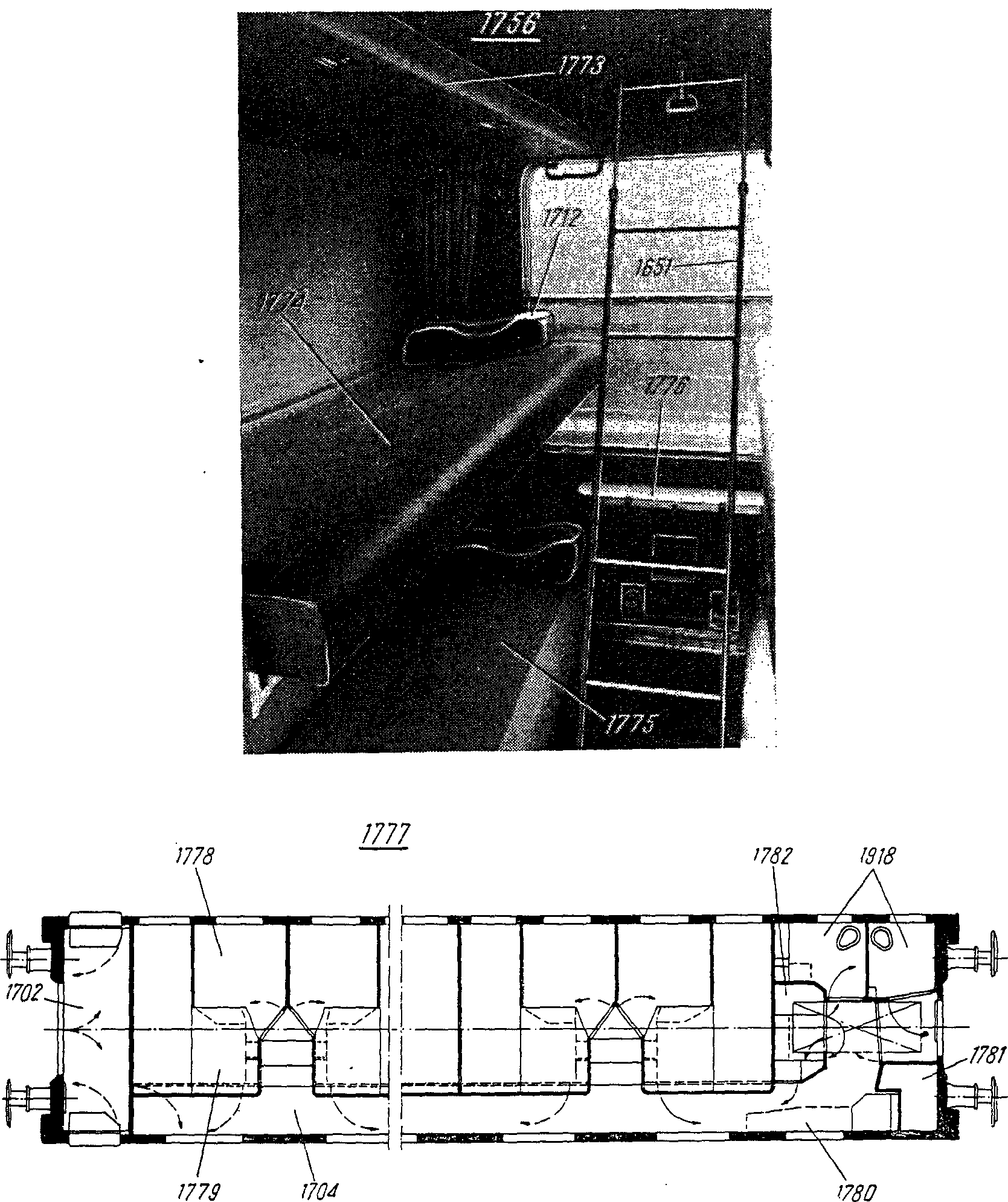 —
—двухосный изотермический вагон
—FRA wagon m réfrigérant à 2 essieuxDEU 2-achsiger Kühlwagen mITA carro m refrigerante a due assiPLN wagon-chłodnia m, dwuosiowyRUS двухосный изотермический вагон mсм. поз. 25 на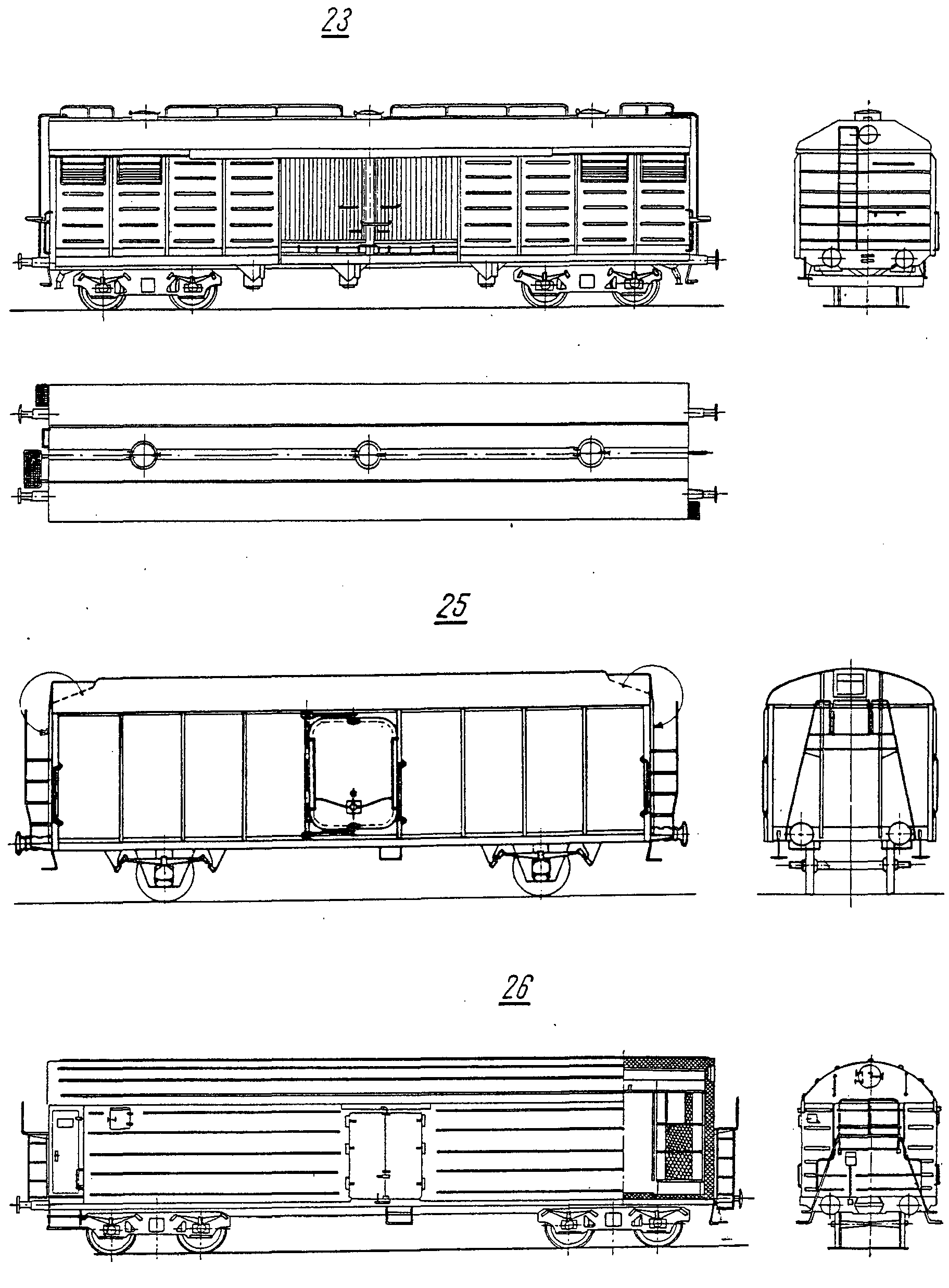 —FRA wagon m couvert à 2 essieuxITA carro m coperto a due assiPLN wagon m kryty dwuosiowyRUS двухосный крытый вагон mсм. поз. 17 на
двухэтажный пассажирский вагон
—FRA voiture f à 2 étagesDEU Doppelstockwagen mITA carrozza f a due pianiPLN wagon m osobowy piętrowyRUS двухэтажный пассажирский вагон mсм. поз. 4 на ——FRA Wagons couvertsDEU Gedeckte WagenENG Covered wagonsITA Carri copertiPLN Wagony kryteRUS Крытые вагоны
крытый вагон для перевозки автомобилей
—FRA wagon m couvert pour transport d’automobilesDEU gedeckter Wagen m für KraftwagenbeförderungITA carro m coperto per trasporto (di) automobiliPLN wagon m kryty do przewozu samochodowRUS крытый вагон m для перевозки автомобилейкрытый вагон для перевозки лошадей
—FRA wagon-écurie m pour transport de chevauxDEU Stallungswagen m, gedeckter Wagen für PferdetransportENG horse boxITA carro m scuderia per trasporto (di) cavalliPLN wagon m do przewozu koniRUS крытый вагон m для перевозки лошадейкрытый вагон с загрузочными и разгрузочными люками
—FRA wagon m couvert avec orifices spéciaux de chargement et de déchargementDEU gedeckter Wagen m mit besonderen Be- und EntladeöffnungenITA carro m coperto con aperture speciali di carico e scaricoPLN wagon m kryty z otworami ładunkowymiRUS крытый вагон m с загрузочными и разгрузочными люкамисм. поз. 23 накрытый вагон с торцевыми дверями
—FRA wagon m couvert à portes en boutDEU gedeckter Wagen m mit StirnwandtürenITA carro m coperto con porte di testaPLN wagon m kryty z drzwiami w ścianie czołowejRUS крытый вагон m с торцевыми дверямикрытый вентилируемый вагон для перевозки овощей
—FRA wagon m couvert à primeursDEU Frühgemüsewagen mITA carro m coperto per primiziePLN wagon m bryty do przewozu warzywRUS крытый вентилируемый вагон m для перевозки овощейсм. поз. 19 напассажирский вагон открытого типа со средним проходом и местами для сидения
—FRA voiture f à couloir centralDEU Personenwagen m mit MittelgangITA carrozza f a corridoio centralePLN wagon m osobowy bezprzedziałowy (z korytarzem w środku)RUS пассажирский вагон m открытого типа со средним проходом и местами для сидениясм. поз. 1 на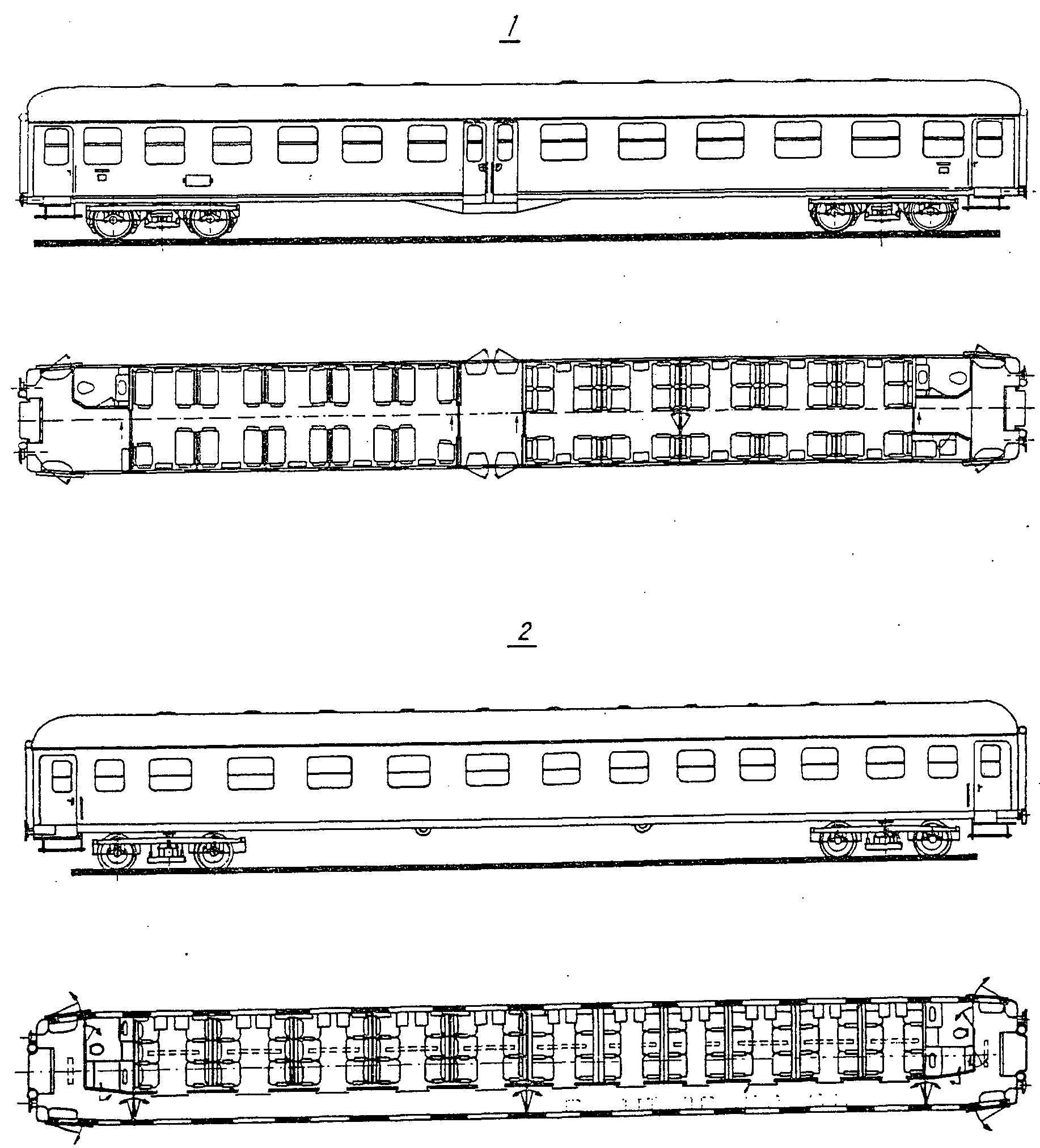
пассажирский вагон с багажным отделением
—FRA voiture f avec compartiment-fourgonDEU Personenwagen m mit GepäckraumITA carrozza f con compartimento per bagagliPLN wagon m osobowy z przedziałem bagażowymRUS пассажирский вагон m с багажным отделениемпассажирский вагон с местами для сидения и лежания а) дневное положение мест б) ночное положение мест
—FRA voiture-couchettes f a) position "jour" b) position "nuit"DEU Liegewagen m a) Tagesstellung b) NachtstellungITA carrozza f a cuccette a) posizione "di giorno" b) posizione "di notte"PLN wagon m z miejscami do leżenia a) ustawienie dzienne b) ustawienie nocneRUS пассажирский вагон m с местами для сидения и лежания а) дневное положение мест б) ночное положение местсм. поз. 5 напассажирский вагон с наружными дверями в каждом купе
—FRA voiture f à portières latéralesDEU Personenwagen m mit AbteiltürenITA carrozza f a sportelli lateraliPLN wagon m osobowy ż bocznymi wejściamiRUS пассажирский вагон m с наружными дверями в каждом купепассажирский купированный вагон с боковым проходом и местами для сидения
—FRA voiture f à couloir latéralDEU Personenwagen m mit SeitengangITA carrozza f a corridoio lateralePLN wagon m osobowy przedziałowy - (z korytarzem bocznym)RUS пассажирский купированный вагон m с боковым проходом и местами для сидениясм. поз. 2 на —FRA voiture f postaleDEU Postwagen mENG mail vanITA carrozza f (o carro) postalePLN wagon m pocztowyRUS почтовый вагон mсм. поз. 13 на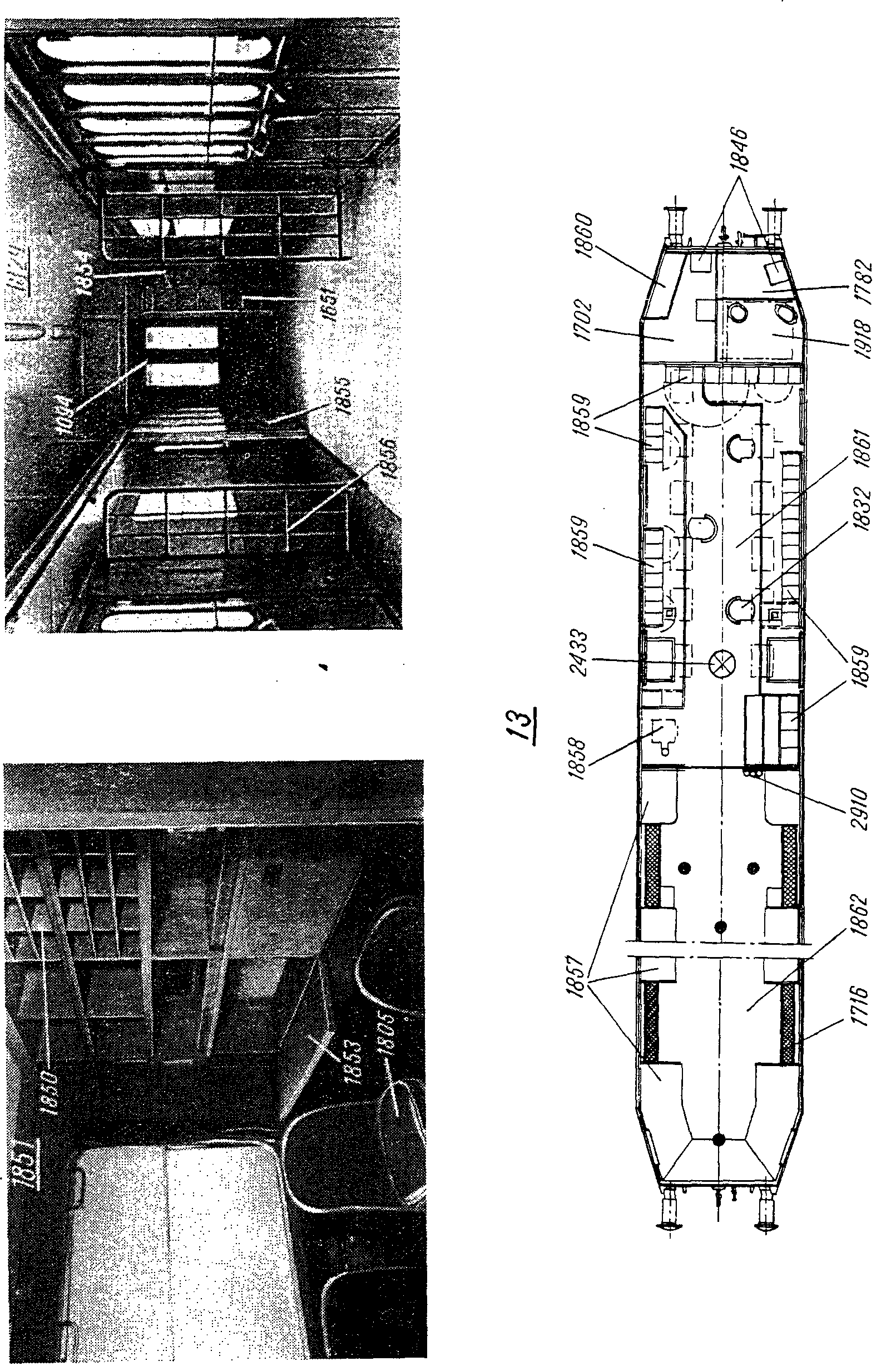
саморазгружающийся вагон с кузовом из 2-х частей, опрокидывающихся к середине
—FRA wagon m auto-déchargeur à déchargement centralDEU Mittenselbstentladewagen mITA carro m autoscaricatore a scarico centralePLN wagon m samowyładowczy łamany ze zsypem w środkuRUS саморазгружающийся вагон m с кузовом из 2-х частей, опрокидывающихся к серединесм. поз. 34 на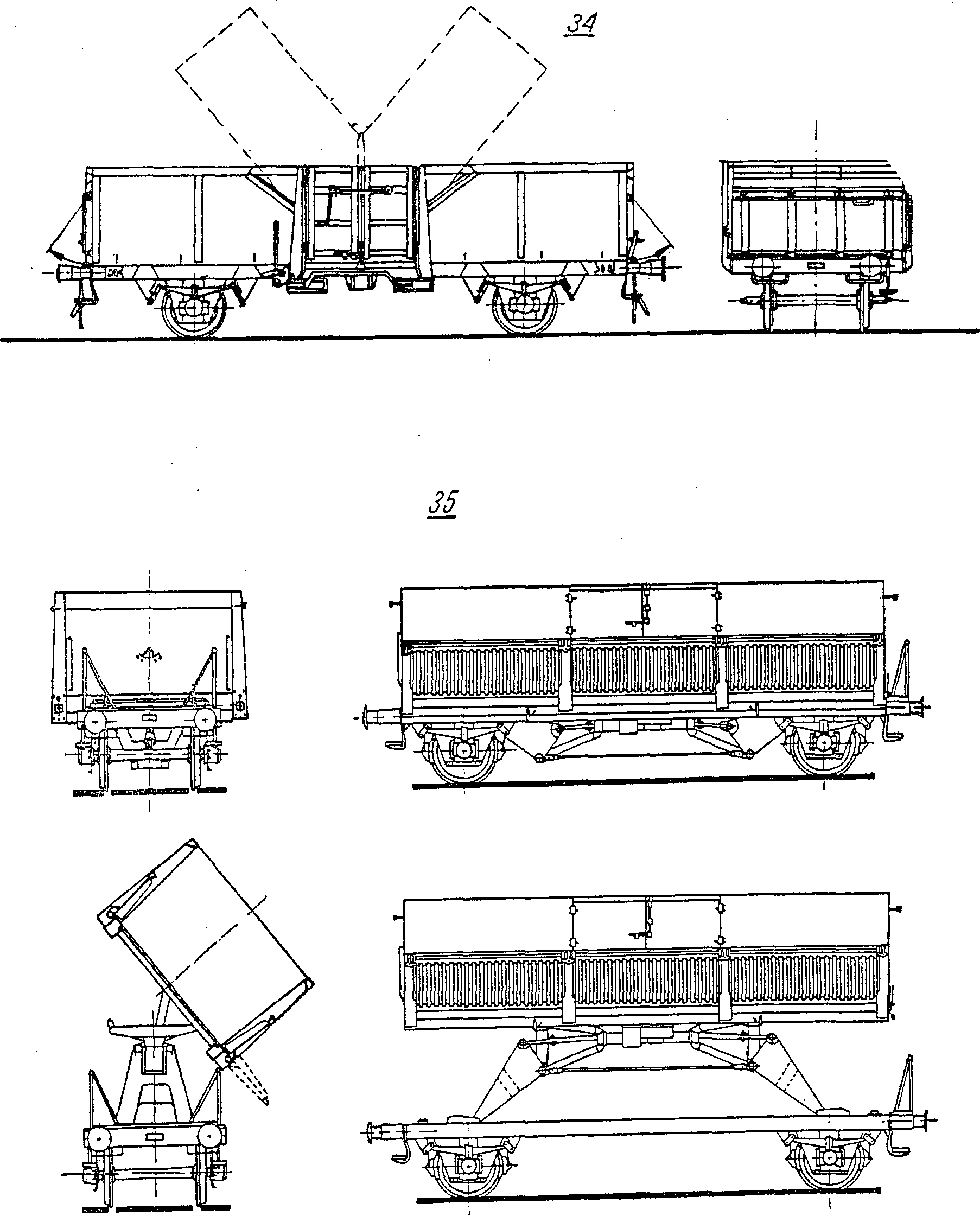 —FRA voiture-ambulance fDEU Krankenwagen mENG ambulance coachITA carrozza f ospedalePLN wagon m sanitarnyRUS санитарный вагон m—FRA voiture-lits fDEU Schlafwagen mENG sleeping carITA carrozza f (con) lettiPLN wagon m sypialnyRUS спальный вагон m
специальный вагон для перевозки автомобилей
—FRA fourgon m spécial pour transport d’autosITA carro m speciale per trasporto (di) autoPLN wagon m bagażowy do przewozu samochodówRUS специальный вагон m для перевозки автомобилейчетырёхосный изотермический вагон
—FRA wagon m réfrigérant à bogiesDEU 4-achsiger Kühlwagen mITA carro m refrigerante a carrelliPLN wagon-chłodnia m, czteroosiowyRUS четырёхосный изотермический вагон mсм. поз. 26 на -
4 П-377
ОБИВАТЬ/ОБИТЬ (ПООБИВАТЬ/ПООБИТЬ rare) ПОРОГИ (чьи) (ПОРОГ (чей)) (чего, у кого, где) ОБИВАТЬ/ОБИТЬ (ПООБИВАТЬ/ ПООБИТЬ гаге) ВСЕ ПОРОГИ (ВЕСЬ ПОРОГ) (у кого, где) all coll VP subj: human usu. impfv) ( usu. in refer, to trying to obtain sth. important for one's job or career from one's superior(s) or some organization(s) may refer to a person trying to get a job, a man trying to gain the affection of a woman etc) to go to some place(s) repeatedly, persistently requesting sth.: X обивает пороги - X beats down doorsX обивает Y-ов порог = X haunts (hangs around) Yb door(way)X обивает пороги редакций (школ и т. п.) - X haunts the door(way)s of various editorial (principals' etc) officesX haunts (the) editors' ((the) principals' etc) offices X runs from one editorial (principal' etc) office to anotherX pesters every editor (principal etc) (in town). "Я, конечно, напишу...» - «Напишу! Ты весь в этом. Не писать надо, а ехать, лично просить, пороги обивать!» (Стругацкие 1). "Of course I'll write-" "You'll write! That's just like you. It's not writing you have to do, you have to go there, ask in person, beat down doors" (1a).Статейки эти... быстро пошли в ход, и уж в этом одном молодой человек оказал всё своё практическое и умственное превосходство над тою многочисленною, вечно нуждающеюся и несчастною частью нашей учащейся молодёжи обоего пола, которая в столицах... с утра до ночи обивает пороги разных газет и журналов... (Достоевский 1). These little articles... were soon in great demand, and even in this alone the young man demonstrated his practical and intellectual superiority over that eternally needy and miserable mass of our students of both sexes who, in our capitals, from morning till night...haunt the doorways of various newspapers and magazines... (1a).(Тригорин:) Такой любви я не испытал ещё... В молодости было некогда, я обивал пороги редакций, боролся с нуждой... (Чехов 6). (Т.:) I have never known a love like that....In my youth there wasn't time, I was always haunting the editors' offices, fighting off poverty... (6a)(Т.:) I have never known a love like that. As a young man, I never had timeI was too busy running from one editorial office to another, trying to earn a living (6b).«Весьма обнадёживающе заявивший о себе ранее молодой поэт-колхозник Влад Самсонов из станицы Пластуновской, бросив семью и работу, ведёт богемный образ жизни, обивая пороги редакций со стихами, оставляющими желать много лучшего» (Максимов 2). "Vlad Samsonov, the peasant poet from the village of Plastunovskaya, whose early work was extremely promising, having abandoned his family and his work is now living a bone-mian life and is pestering every editor in town with verses that leave a great deal to be desired" (2a). -
5 обивать весь порог
• ОБИВАТЬ/ОБИТЬ <ПООБИВАТЬ/ПООБИТЬ rare> ПОРОГИ( чьи) < ПОРОГ (чей)> (чего, у кого, где; ОБИВАТЬ/ОБИТЬ <ПООБИВАТЬ/ПООБИТЬ rare> ВСЕ ПОРОГИ < ВЕСЬ ПОРОГ> (у кого, где) all coll[VP; subj: human; usu. impfv]=====⇒ (usu. in refer, to trying to obtain sth. important for one's job or career from one's superior(s) or some organization(s); may refer to a person trying to get a job, a man trying to gain the affection of a woman etc) to go to some place(s) repeatedly, persistently requesting sth.:|| X обивает пороги редакций (школ и т. п.) ≈ X haunts the door(way)s of various editorial (principals? etc) offices;- X haunts (the) editors' <(the) principals' etc> offices;- X runs from one editorial (principal's etc) office to another;- X pesters every editor (principal etc) (in town).♦ "Я, конечно, напишу..." - "Напишу! Ты весь в этом. Не писать надо, а ехать, лично просить, пороги обивать!" (Стругацкие 1). "Of course I'll write-" "You'll write! That's just like you. It's not writing you have to do, you have to go there, ask in person, beat down doors" (1a).♦ Статейки эти... быстро пошли в ход, и уж в этом одном молодой человек оказал всё своё практическое и умственное превосходство над тою многочисленною, вечно нуждающеюся и несчастною частью нашей учащейся молодёжи обоего пола, которая в столицах... с утра до ночи обивает пороги разных газет и журналов... (Достоевский 1). These little articles... were soon in great demand; and even in this alone the young man demonstrated his practical and intellectual superiority over that eternally needy and miserable mass of our students of both sexes who, in our capitals, from morning till night...haunt the doorways of various newspapers and magazines... (1a).♦ [Тригорин:] Такой любви я не испытал ещё... В молодости было некогда, я обивал пороги редакций, боролся с нуждой... (Чехов 6). [Т.:] I have never known a love like that....In my youth there wasn't time, I was always haunting the editors' offices, fighting off poverty... (6a). [Т.:] I have never known a love like that. As a young man, I never had time; I was too busy running from one editorial office to another, trying to earn a living (6b).♦ "Весьма обнадёживающе заявивший о себе ранее молодой поэт-колхозник Влад Самсонов из станицы Пластуновской, бросив семью и работу, ведёт богемный образ жизни, обивая пороги редакций со стихами, оставляющими желать много лучшего" (Максимов 2). "Vlad Samsonov, the peasant poet from the village of Plastunovskaya, whose early work was extremely promising, having abandoned his family and his work is now living a bohemian life and is pestering every editor in town with verses that leave a great deal to be desired" (2a).Большой русско-английский фразеологический словарь > обивать весь порог
-
6 обивать все пороги
• ОБИВАТЬ/ОБИТЬ <ПООБИВАТЬ/ПООБИТЬ rare> ПОРОГИ( чьи) < ПОРОГ (чей)> (чего, у кого, где; ОБИВАТЬ/ОБИТЬ <ПООБИВАТЬ/ПООБИТЬ rare> ВСЕ ПОРОГИ < ВЕСЬ ПОРОГ> (у кого, где) all coll[VP; subj: human; usu. impfv]=====⇒ (usu. in refer, to trying to obtain sth. important for one's job or career from one's superior(s) or some organization(s); may refer to a person trying to get a job, a man trying to gain the affection of a woman etc) to go to some place(s) repeatedly, persistently requesting sth.:|| X обивает пороги редакций (школ и т. п.) ≈ X haunts the door(way)s of various editorial (principals? etc) offices;- X haunts (the) editors' <(the) principals' etc> offices;- X runs from one editorial (principal's etc) office to another;- X pesters every editor (principal etc) (in town).♦ "Я, конечно, напишу..." - "Напишу! Ты весь в этом. Не писать надо, а ехать, лично просить, пороги обивать!" (Стругацкие 1). "Of course I'll write-" "You'll write! That's just like you. It's not writing you have to do, you have to go there, ask in person, beat down doors" (1a).♦ Статейки эти... быстро пошли в ход, и уж в этом одном молодой человек оказал всё своё практическое и умственное превосходство над тою многочисленною, вечно нуждающеюся и несчастною частью нашей учащейся молодёжи обоего пола, которая в столицах... с утра до ночи обивает пороги разных газет и журналов... (Достоевский 1). These little articles... were soon in great demand; and even in this alone the young man demonstrated his practical and intellectual superiority over that eternally needy and miserable mass of our students of both sexes who, in our capitals, from morning till night...haunt the doorways of various newspapers and magazines... (1a).♦ [Тригорин:] Такой любви я не испытал ещё... В молодости было некогда, я обивал пороги редакций, боролся с нуждой... (Чехов 6). [Т.:] I have never known a love like that....In my youth there wasn't time, I was always haunting the editors' offices, fighting off poverty... (6a). [Т.:] I have never known a love like that. As a young man, I never had time; I was too busy running from one editorial office to another, trying to earn a living (6b).♦ "Весьма обнадёживающе заявивший о себе ранее молодой поэт-колхозник Влад Самсонов из станицы Пластуновской, бросив семью и работу, ведёт богемный образ жизни, обивая пороги редакций со стихами, оставляющими желать много лучшего" (Максимов 2). "Vlad Samsonov, the peasant poet from the village of Plastunovskaya, whose early work was extremely promising, having abandoned his family and his work is now living a bohemian life and is pestering every editor in town with verses that leave a great deal to be desired" (2a).Большой русско-английский фразеологический словарь > обивать все пороги
-
7 обивать порог
• ОБИВАТЬ/ОБИТЬ <ПООБИВАТЬ/ПООБИТЬ rare> ПОРОГИ( чьи) < ПОРОГ (чей)> (чего, у кого, где; ОБИВАТЬ/ОБИТЬ <ПООБИВАТЬ/ПООБИТЬ rare> ВСЕ ПОРОГИ < ВЕСЬ ПОРОГ> (у кого, где) all coll[VP; subj: human; usu. impfv]=====⇒ (usu. in refer, to trying to obtain sth. important for one's job or career from one's superior(s) or some organization(s); may refer to a person trying to get a job, a man trying to gain the affection of a woman etc) to go to some place(s) repeatedly, persistently requesting sth.:|| X обивает пороги редакций (школ и т. п.) ≈ X haunts the door(way)s of various editorial (principals? etc) offices;- X haunts (the) editors' <(the) principals' etc> offices;- X runs from one editorial (principal's etc) office to another;- X pesters every editor (principal etc) (in town).♦ "Я, конечно, напишу..." - "Напишу! Ты весь в этом. Не писать надо, а ехать, лично просить, пороги обивать!" (Стругацкие 1). "Of course I'll write-" "You'll write! That's just like you. It's not writing you have to do, you have to go there, ask in person, beat down doors" (1a).♦ Статейки эти... быстро пошли в ход, и уж в этом одном молодой человек оказал всё своё практическое и умственное превосходство над тою многочисленною, вечно нуждающеюся и несчастною частью нашей учащейся молодёжи обоего пола, которая в столицах... с утра до ночи обивает пороги разных газет и журналов... (Достоевский 1). These little articles... were soon in great demand; and even in this alone the young man demonstrated his practical and intellectual superiority over that eternally needy and miserable mass of our students of both sexes who, in our capitals, from morning till night...haunt the doorways of various newspapers and magazines... (1a).♦ [Тригорин:] Такой любви я не испытал ещё... В молодости было некогда, я обивал пороги редакций, боролся с нуждой... (Чехов 6). [Т.:] I have never known a love like that....In my youth there wasn't time, I was always haunting the editors' offices, fighting off poverty... (6a). [Т.:] I have never known a love like that. As a young man, I never had time; I was too busy running from one editorial office to another, trying to earn a living (6b).♦ "Весьма обнадёживающе заявивший о себе ранее молодой поэт-колхозник Влад Самсонов из станицы Пластуновской, бросив семью и работу, ведёт богемный образ жизни, обивая пороги редакций со стихами, оставляющими желать много лучшего" (Максимов 2). "Vlad Samsonov, the peasant poet from the village of Plastunovskaya, whose early work was extremely promising, having abandoned his family and his work is now living a bohemian life and is pestering every editor in town with verses that leave a great deal to be desired" (2a).Большой русско-английский фразеологический словарь > обивать порог
-
8 обивать пороги
• ОБИВАТЬ/ОБИТЬ <ПООБИВАТЬ/ПООБИТЬ rare> ПОРОГИ( чьи) < ПОРОГ (чей)> (чего, у кого, где; ОБИВАТЬ/ОБИТЬ <ПООБИВАТЬ/ПООБИТЬ rare> ВСЕ ПОРОГИ < ВЕСЬ ПОРОГ> (у кого, где) all coll[VP; subj: human; usu. impfv]=====⇒ (usu. in refer, to trying to obtain sth. important for one's job or career from one's superior(s) or some organization(s); may refer to a person trying to get a job, a man trying to gain the affection of a woman etc) to go to some place(s) repeatedly, persistently requesting sth.:|| X обивает пороги редакций (школ и т. п.) ≈ X haunts the door(way)s of various editorial (principals? etc) offices;- X haunts (the) editors' <(the) principals' etc> offices;- X runs from one editorial (principal's etc) office to another;- X pesters every editor (principal etc) (in town).♦ "Я, конечно, напишу..." - "Напишу! Ты весь в этом. Не писать надо, а ехать, лично просить, пороги обивать!" (Стругацкие 1). "Of course I'll write-" "You'll write! That's just like you. It's not writing you have to do, you have to go there, ask in person, beat down doors" (1a).♦ Статейки эти... быстро пошли в ход, и уж в этом одном молодой человек оказал всё своё практическое и умственное превосходство над тою многочисленною, вечно нуждающеюся и несчастною частью нашей учащейся молодёжи обоего пола, которая в столицах... с утра до ночи обивает пороги разных газет и журналов... (Достоевский 1). These little articles... were soon in great demand; and even in this alone the young man demonstrated his practical and intellectual superiority over that eternally needy and miserable mass of our students of both sexes who, in our capitals, from morning till night...haunt the doorways of various newspapers and magazines... (1a).♦ [Тригорин:] Такой любви я не испытал ещё... В молодости было некогда, я обивал пороги редакций, боролся с нуждой... (Чехов 6). [Т.:] I have never known a love like that....In my youth there wasn't time, I was always haunting the editors' offices, fighting off poverty... (6a). [Т.:] I have never known a love like that. As a young man, I never had time; I was too busy running from one editorial office to another, trying to earn a living (6b).♦ "Весьма обнадёживающе заявивший о себе ранее молодой поэт-колхозник Влад Самсонов из станицы Пластуновской, бросив семью и работу, ведёт богемный образ жизни, обивая пороги редакций со стихами, оставляющими желать много лучшего" (Максимов 2). "Vlad Samsonov, the peasant poet from the village of Plastunovskaya, whose early work was extremely promising, having abandoned his family and his work is now living a bohemian life and is pestering every editor in town with verses that leave a great deal to be desired" (2a).Большой русско-английский фразеологический словарь > обивать пороги
-
9 обить весь порог
• ОБИВАТЬ/ОБИТЬ <ПООБИВАТЬ/ПООБИТЬ rare> ПОРОГИ( чьи) < ПОРОГ (чей)> (чего, у кого, где; ОБИВАТЬ/ОБИТЬ <ПООБИВАТЬ/ПООБИТЬ rare> ВСЕ ПОРОГИ < ВЕСЬ ПОРОГ> (у кого, где) all coll[VP; subj: human; usu. impfv]=====⇒ (usu. in refer, to trying to obtain sth. important for one's job or career from one's superior(s) or some organization(s); may refer to a person trying to get a job, a man trying to gain the affection of a woman etc) to go to some place(s) repeatedly, persistently requesting sth.:|| X обивает пороги редакций (школ и т. п.) ≈ X haunts the door(way)s of various editorial (principals? etc) offices;- X haunts (the) editors' <(the) principals' etc> offices;- X runs from one editorial (principal's etc) office to another;- X pesters every editor (principal etc) (in town).♦ "Я, конечно, напишу..." - "Напишу! Ты весь в этом. Не писать надо, а ехать, лично просить, пороги обивать!" (Стругацкие 1). "Of course I'll write-" "You'll write! That's just like you. It's not writing you have to do, you have to go there, ask in person, beat down doors" (1a).♦ Статейки эти... быстро пошли в ход, и уж в этом одном молодой человек оказал всё своё практическое и умственное превосходство над тою многочисленною, вечно нуждающеюся и несчастною частью нашей учащейся молодёжи обоего пола, которая в столицах... с утра до ночи обивает пороги разных газет и журналов... (Достоевский 1). These little articles... were soon in great demand; and even in this alone the young man demonstrated his practical and intellectual superiority over that eternally needy and miserable mass of our students of both sexes who, in our capitals, from morning till night...haunt the doorways of various newspapers and magazines... (1a).♦ [Тригорин:] Такой любви я не испытал ещё... В молодости было некогда, я обивал пороги редакций, боролся с нуждой... (Чехов 6). [Т.:] I have never known a love like that....In my youth there wasn't time, I was always haunting the editors' offices, fighting off poverty... (6a). [Т.:] I have never known a love like that. As a young man, I never had time; I was too busy running from one editorial office to another, trying to earn a living (6b).♦ "Весьма обнадёживающе заявивший о себе ранее молодой поэт-колхозник Влад Самсонов из станицы Пластуновской, бросив семью и работу, ведёт богемный образ жизни, обивая пороги редакций со стихами, оставляющими желать много лучшего" (Максимов 2). "Vlad Samsonov, the peasant poet from the village of Plastunovskaya, whose early work was extremely promising, having abandoned his family and his work is now living a bohemian life and is pestering every editor in town with verses that leave a great deal to be desired" (2a).Большой русско-английский фразеологический словарь > обить весь порог
-
10 обить все пороги
• ОБИВАТЬ/ОБИТЬ <ПООБИВАТЬ/ПООБИТЬ rare> ПОРОГИ( чьи) < ПОРОГ (чей)> (чего, у кого, где; ОБИВАТЬ/ОБИТЬ <ПООБИВАТЬ/ПООБИТЬ rare> ВСЕ ПОРОГИ < ВЕСЬ ПОРОГ> (у кого, где) all coll[VP; subj: human; usu. impfv]=====⇒ (usu. in refer, to trying to obtain sth. important for one's job or career from one's superior(s) or some organization(s); may refer to a person trying to get a job, a man trying to gain the affection of a woman etc) to go to some place(s) repeatedly, persistently requesting sth.:|| X обивает пороги редакций (школ и т. п.) ≈ X haunts the door(way)s of various editorial (principals? etc) offices;- X haunts (the) editors' <(the) principals' etc> offices;- X runs from one editorial (principal's etc) office to another;- X pesters every editor (principal etc) (in town).♦ "Я, конечно, напишу..." - "Напишу! Ты весь в этом. Не писать надо, а ехать, лично просить, пороги обивать!" (Стругацкие 1). "Of course I'll write-" "You'll write! That's just like you. It's not writing you have to do, you have to go there, ask in person, beat down doors" (1a).♦ Статейки эти... быстро пошли в ход, и уж в этом одном молодой человек оказал всё своё практическое и умственное превосходство над тою многочисленною, вечно нуждающеюся и несчастною частью нашей учащейся молодёжи обоего пола, которая в столицах... с утра до ночи обивает пороги разных газет и журналов... (Достоевский 1). These little articles... were soon in great demand; and even in this alone the young man demonstrated his practical and intellectual superiority over that eternally needy and miserable mass of our students of both sexes who, in our capitals, from morning till night...haunt the doorways of various newspapers and magazines... (1a).♦ [Тригорин:] Такой любви я не испытал ещё... В молодости было некогда, я обивал пороги редакций, боролся с нуждой... (Чехов 6). [Т.:] I have never known a love like that....In my youth there wasn't time, I was always haunting the editors' offices, fighting off poverty... (6a). [Т.:] I have never known a love like that. As a young man, I never had time; I was too busy running from one editorial office to another, trying to earn a living (6b).♦ "Весьма обнадёживающе заявивший о себе ранее молодой поэт-колхозник Влад Самсонов из станицы Пластуновской, бросив семью и работу, ведёт богемный образ жизни, обивая пороги редакций со стихами, оставляющими желать много лучшего" (Максимов 2). "Vlad Samsonov, the peasant poet from the village of Plastunovskaya, whose early work was extremely promising, having abandoned his family and his work is now living a bohemian life and is pestering every editor in town with verses that leave a great deal to be desired" (2a).Большой русско-английский фразеологический словарь > обить все пороги
-
11 обить порог
• ОБИВАТЬ/ОБИТЬ <ПООБИВАТЬ/ПООБИТЬ rare> ПОРОГИ( чьи) < ПОРОГ (чей)> (чего, у кого, где; ОБИВАТЬ/ОБИТЬ <ПООБИВАТЬ/ПООБИТЬ rare> ВСЕ ПОРОГИ < ВЕСЬ ПОРОГ> (у кого, где) all coll[VP; subj: human; usu. impfv]=====⇒ (usu. in refer, to trying to obtain sth. important for one's job or career from one's superior(s) or some organization(s); may refer to a person trying to get a job, a man trying to gain the affection of a woman etc) to go to some place(s) repeatedly, persistently requesting sth.:|| X обивает пороги редакций (школ и т. п.) ≈ X haunts the door(way)s of various editorial (principals? etc) offices;- X haunts (the) editors' <(the) principals' etc> offices;- X runs from one editorial (principal's etc) office to another;- X pesters every editor (principal etc) (in town).♦ "Я, конечно, напишу..." - "Напишу! Ты весь в этом. Не писать надо, а ехать, лично просить, пороги обивать!" (Стругацкие 1). "Of course I'll write-" "You'll write! That's just like you. It's not writing you have to do, you have to go there, ask in person, beat down doors" (1a).♦ Статейки эти... быстро пошли в ход, и уж в этом одном молодой человек оказал всё своё практическое и умственное превосходство над тою многочисленною, вечно нуждающеюся и несчастною частью нашей учащейся молодёжи обоего пола, которая в столицах... с утра до ночи обивает пороги разных газет и журналов... (Достоевский 1). These little articles... were soon in great demand; and even in this alone the young man demonstrated his practical and intellectual superiority over that eternally needy and miserable mass of our students of both sexes who, in our capitals, from morning till night...haunt the doorways of various newspapers and magazines... (1a).♦ [Тригорин:] Такой любви я не испытал ещё... В молодости было некогда, я обивал пороги редакций, боролся с нуждой... (Чехов 6). [Т.:] I have never known a love like that....In my youth there wasn't time, I was always haunting the editors' offices, fighting off poverty... (6a). [Т.:] I have never known a love like that. As a young man, I never had time; I was too busy running from one editorial office to another, trying to earn a living (6b).♦ "Весьма обнадёживающе заявивший о себе ранее молодой поэт-колхозник Влад Самсонов из станицы Пластуновской, бросив семью и работу, ведёт богемный образ жизни, обивая пороги редакций со стихами, оставляющими желать много лучшего" (Максимов 2). "Vlad Samsonov, the peasant poet from the village of Plastunovskaya, whose early work was extremely promising, having abandoned his family and his work is now living a bohemian life and is pestering every editor in town with verses that leave a great deal to be desired" (2a).Большой русско-английский фразеологический словарь > обить порог
-
12 обить пороги
• ОБИВАТЬ/ОБИТЬ <ПООБИВАТЬ/ПООБИТЬ rare> ПОРОГИ( чьи) < ПОРОГ (чей)> (чего, у кого, где; ОБИВАТЬ/ОБИТЬ <ПООБИВАТЬ/ПООБИТЬ rare> ВСЕ ПОРОГИ < ВЕСЬ ПОРОГ> (у кого, где) all coll[VP; subj: human; usu. impfv]=====⇒ (usu. in refer, to trying to obtain sth. important for one's job or career from one's superior(s) or some organization(s); may refer to a person trying to get a job, a man trying to gain the affection of a woman etc) to go to some place(s) repeatedly, persistently requesting sth.:|| X обивает пороги редакций (школ и т. п.) ≈ X haunts the door(way)s of various editorial (principals? etc) offices;- X haunts (the) editors' <(the) principals' etc> offices;- X runs from one editorial (principal's etc) office to another;- X pesters every editor (principal etc) (in town).♦ "Я, конечно, напишу..." - "Напишу! Ты весь в этом. Не писать надо, а ехать, лично просить, пороги обивать!" (Стругацкие 1). "Of course I'll write-" "You'll write! That's just like you. It's not writing you have to do, you have to go there, ask in person, beat down doors" (1a).♦ Статейки эти... быстро пошли в ход, и уж в этом одном молодой человек оказал всё своё практическое и умственное превосходство над тою многочисленною, вечно нуждающеюся и несчастною частью нашей учащейся молодёжи обоего пола, которая в столицах... с утра до ночи обивает пороги разных газет и журналов... (Достоевский 1). These little articles... were soon in great demand; and even in this alone the young man demonstrated his practical and intellectual superiority over that eternally needy and miserable mass of our students of both sexes who, in our capitals, from morning till night...haunt the doorways of various newspapers and magazines... (1a).♦ [Тригорин:] Такой любви я не испытал ещё... В молодости было некогда, я обивал пороги редакций, боролся с нуждой... (Чехов 6). [Т.:] I have never known a love like that....In my youth there wasn't time, I was always haunting the editors' offices, fighting off poverty... (6a). [Т.:] I have never known a love like that. As a young man, I never had time; I was too busy running from one editorial office to another, trying to earn a living (6b).♦ "Весьма обнадёживающе заявивший о себе ранее молодой поэт-колхозник Влад Самсонов из станицы Пластуновской, бросив семью и работу, ведёт богемный образ жизни, обивая пороги редакций со стихами, оставляющими желать много лучшего" (Максимов 2). "Vlad Samsonov, the peasant poet from the village of Plastunovskaya, whose early work was extremely promising, having abandoned his family and his work is now living a bohemian life and is pestering every editor in town with verses that leave a great deal to be desired" (2a).Большой русско-английский фразеологический словарь > обить пороги
-
13 пообивать весь порог
• ОБИВАТЬ/ОБИТЬ <ПООБИВАТЬ/ПООБИТЬ rare> ПОРОГИ( чьи) < ПОРОГ (чей)> (чего, у кого, где; ОБИВАТЬ/ОБИТЬ <ПООБИВАТЬ/ПООБИТЬ rare> ВСЕ ПОРОГИ < ВЕСЬ ПОРОГ> (у кого, где) all coll[VP; subj: human; usu. impfv]=====⇒ (usu. in refer, to trying to obtain sth. important for one's job or career from one's superior(s) or some organization(s); may refer to a person trying to get a job, a man trying to gain the affection of a woman etc) to go to some place(s) repeatedly, persistently requesting sth.:|| X обивает пороги редакций (школ и т. п.) ≈ X haunts the door(way)s of various editorial (principals? etc) offices;- X haunts (the) editors' <(the) principals' etc> offices;- X runs from one editorial (principal's etc) office to another;- X pesters every editor (principal etc) (in town).♦ "Я, конечно, напишу..." - "Напишу! Ты весь в этом. Не писать надо, а ехать, лично просить, пороги обивать!" (Стругацкие 1). "Of course I'll write-" "You'll write! That's just like you. It's not writing you have to do, you have to go there, ask in person, beat down doors" (1a).♦ Статейки эти... быстро пошли в ход, и уж в этом одном молодой человек оказал всё своё практическое и умственное превосходство над тою многочисленною, вечно нуждающеюся и несчастною частью нашей учащейся молодёжи обоего пола, которая в столицах... с утра до ночи обивает пороги разных газет и журналов... (Достоевский 1). These little articles... were soon in great demand; and even in this alone the young man demonstrated his practical and intellectual superiority over that eternally needy and miserable mass of our students of both sexes who, in our capitals, from morning till night...haunt the doorways of various newspapers and magazines... (1a).♦ [Тригорин:] Такой любви я не испытал ещё... В молодости было некогда, я обивал пороги редакций, боролся с нуждой... (Чехов 6). [Т.:] I have never known a love like that....In my youth there wasn't time, I was always haunting the editors' offices, fighting off poverty... (6a). [Т.:] I have never known a love like that. As a young man, I never had time; I was too busy running from one editorial office to another, trying to earn a living (6b).♦ "Весьма обнадёживающе заявивший о себе ранее молодой поэт-колхозник Влад Самсонов из станицы Пластуновской, бросив семью и работу, ведёт богемный образ жизни, обивая пороги редакций со стихами, оставляющими желать много лучшего" (Максимов 2). "Vlad Samsonov, the peasant poet from the village of Plastunovskaya, whose early work was extremely promising, having abandoned his family and his work is now living a bohemian life and is pestering every editor in town with verses that leave a great deal to be desired" (2a).Большой русско-английский фразеологический словарь > пообивать весь порог
-
14 пообивать все пороги
• ОБИВАТЬ/ОБИТЬ <ПООБИВАТЬ/ПООБИТЬ rare> ПОРОГИ( чьи) < ПОРОГ (чей)> (чего, у кого, где; ОБИВАТЬ/ОБИТЬ <ПООБИВАТЬ/ПООБИТЬ rare> ВСЕ ПОРОГИ < ВЕСЬ ПОРОГ> (у кого, где) all coll[VP; subj: human; usu. impfv]=====⇒ (usu. in refer, to trying to obtain sth. important for one's job or career from one's superior(s) or some organization(s); may refer to a person trying to get a job, a man trying to gain the affection of a woman etc) to go to some place(s) repeatedly, persistently requesting sth.:|| X обивает пороги редакций (школ и т. п.) ≈ X haunts the door(way)s of various editorial (principals? etc) offices;- X haunts (the) editors' <(the) principals' etc> offices;- X runs from one editorial (principal's etc) office to another;- X pesters every editor (principal etc) (in town).♦ "Я, конечно, напишу..." - "Напишу! Ты весь в этом. Не писать надо, а ехать, лично просить, пороги обивать!" (Стругацкие 1). "Of course I'll write-" "You'll write! That's just like you. It's not writing you have to do, you have to go there, ask in person, beat down doors" (1a).♦ Статейки эти... быстро пошли в ход, и уж в этом одном молодой человек оказал всё своё практическое и умственное превосходство над тою многочисленною, вечно нуждающеюся и несчастною частью нашей учащейся молодёжи обоего пола, которая в столицах... с утра до ночи обивает пороги разных газет и журналов... (Достоевский 1). These little articles... were soon in great demand; and even in this alone the young man demonstrated his practical and intellectual superiority over that eternally needy and miserable mass of our students of both sexes who, in our capitals, from morning till night...haunt the doorways of various newspapers and magazines... (1a).♦ [Тригорин:] Такой любви я не испытал ещё... В молодости было некогда, я обивал пороги редакций, боролся с нуждой... (Чехов 6). [Т.:] I have never known a love like that....In my youth there wasn't time, I was always haunting the editors' offices, fighting off poverty... (6a). [Т.:] I have never known a love like that. As a young man, I never had time; I was too busy running from one editorial office to another, trying to earn a living (6b).♦ "Весьма обнадёживающе заявивший о себе ранее молодой поэт-колхозник Влад Самсонов из станицы Пластуновской, бросив семью и работу, ведёт богемный образ жизни, обивая пороги редакций со стихами, оставляющими желать много лучшего" (Максимов 2). "Vlad Samsonov, the peasant poet from the village of Plastunovskaya, whose early work was extremely promising, having abandoned his family and his work is now living a bohemian life and is pestering every editor in town with verses that leave a great deal to be desired" (2a).Большой русско-английский фразеологический словарь > пообивать все пороги
-
15 пообивать порог
• ОБИВАТЬ/ОБИТЬ <ПООБИВАТЬ/ПООБИТЬ rare> ПОРОГИ( чьи) < ПОРОГ (чей)> (чего, у кого, где; ОБИВАТЬ/ОБИТЬ <ПООБИВАТЬ/ПООБИТЬ rare> ВСЕ ПОРОГИ < ВЕСЬ ПОРОГ> (у кого, где) all coll[VP; subj: human; usu. impfv]=====⇒ (usu. in refer, to trying to obtain sth. important for one's job or career from one's superior(s) or some organization(s); may refer to a person trying to get a job, a man trying to gain the affection of a woman etc) to go to some place(s) repeatedly, persistently requesting sth.:|| X обивает пороги редакций (школ и т. п.) ≈ X haunts the door(way)s of various editorial (principals? etc) offices;- X haunts (the) editors' <(the) principals' etc> offices;- X runs from one editorial (principal's etc) office to another;- X pesters every editor (principal etc) (in town).♦ "Я, конечно, напишу..." - "Напишу! Ты весь в этом. Не писать надо, а ехать, лично просить, пороги обивать!" (Стругацкие 1). "Of course I'll write-" "You'll write! That's just like you. It's not writing you have to do, you have to go there, ask in person, beat down doors" (1a).♦ Статейки эти... быстро пошли в ход, и уж в этом одном молодой человек оказал всё своё практическое и умственное превосходство над тою многочисленною, вечно нуждающеюся и несчастною частью нашей учащейся молодёжи обоего пола, которая в столицах... с утра до ночи обивает пороги разных газет и журналов... (Достоевский 1). These little articles... were soon in great demand; and even in this alone the young man demonstrated his practical and intellectual superiority over that eternally needy and miserable mass of our students of both sexes who, in our capitals, from morning till night...haunt the doorways of various newspapers and magazines... (1a).♦ [Тригорин:] Такой любви я не испытал ещё... В молодости было некогда, я обивал пороги редакций, боролся с нуждой... (Чехов 6). [Т.:] I have never known a love like that....In my youth there wasn't time, I was always haunting the editors' offices, fighting off poverty... (6a). [Т.:] I have never known a love like that. As a young man, I never had time; I was too busy running from one editorial office to another, trying to earn a living (6b).♦ "Весьма обнадёживающе заявивший о себе ранее молодой поэт-колхозник Влад Самсонов из станицы Пластуновской, бросив семью и работу, ведёт богемный образ жизни, обивая пороги редакций со стихами, оставляющими желать много лучшего" (Максимов 2). "Vlad Samsonov, the peasant poet from the village of Plastunovskaya, whose early work was extremely promising, having abandoned his family and his work is now living a bohemian life and is pestering every editor in town with verses that leave a great deal to be desired" (2a).Большой русско-английский фразеологический словарь > пообивать порог
-
16 пообивать пороги
• ОБИВАТЬ/ОБИТЬ <ПООБИВАТЬ/ПООБИТЬ rare> ПОРОГИ( чьи) < ПОРОГ (чей)> (чего, у кого, где; ОБИВАТЬ/ОБИТЬ <ПООБИВАТЬ/ПООБИТЬ rare> ВСЕ ПОРОГИ < ВЕСЬ ПОРОГ> (у кого, где) all coll[VP; subj: human; usu. impfv]=====⇒ (usu. in refer, to trying to obtain sth. important for one's job or career from one's superior(s) or some organization(s); may refer to a person trying to get a job, a man trying to gain the affection of a woman etc) to go to some place(s) repeatedly, persistently requesting sth.:|| X обивает пороги редакций (школ и т. п.) ≈ X haunts the door(way)s of various editorial (principals? etc) offices;- X haunts (the) editors' <(the) principals' etc> offices;- X runs from one editorial (principal's etc) office to another;- X pesters every editor (principal etc) (in town).♦ "Я, конечно, напишу..." - "Напишу! Ты весь в этом. Не писать надо, а ехать, лично просить, пороги обивать!" (Стругацкие 1). "Of course I'll write-" "You'll write! That's just like you. It's not writing you have to do, you have to go there, ask in person, beat down doors" (1a).♦ Статейки эти... быстро пошли в ход, и уж в этом одном молодой человек оказал всё своё практическое и умственное превосходство над тою многочисленною, вечно нуждающеюся и несчастною частью нашей учащейся молодёжи обоего пола, которая в столицах... с утра до ночи обивает пороги разных газет и журналов... (Достоевский 1). These little articles... were soon in great demand; and even in this alone the young man demonstrated his practical and intellectual superiority over that eternally needy and miserable mass of our students of both sexes who, in our capitals, from morning till night...haunt the doorways of various newspapers and magazines... (1a).♦ [Тригорин:] Такой любви я не испытал ещё... В молодости было некогда, я обивал пороги редакций, боролся с нуждой... (Чехов 6). [Т.:] I have never known a love like that....In my youth there wasn't time, I was always haunting the editors' offices, fighting off poverty... (6a). [Т.:] I have never known a love like that. As a young man, I never had time; I was too busy running from one editorial office to another, trying to earn a living (6b).♦ "Весьма обнадёживающе заявивший о себе ранее молодой поэт-колхозник Влад Самсонов из станицы Пластуновской, бросив семью и работу, ведёт богемный образ жизни, обивая пороги редакций со стихами, оставляющими желать много лучшего" (Максимов 2). "Vlad Samsonov, the peasant poet from the village of Plastunovskaya, whose early work was extremely promising, having abandoned his family and his work is now living a bohemian life and is pestering every editor in town with verses that leave a great deal to be desired" (2a).Большой русско-английский фразеологический словарь > пообивать пороги
-
17 пообить весь порог
• ОБИВАТЬ/ОБИТЬ <ПООБИВАТЬ/ПООБИТЬ rare> ПОРОГИ( чьи) < ПОРОГ (чей)> (чего, у кого, где; ОБИВАТЬ/ОБИТЬ <ПООБИВАТЬ/ПООБИТЬ rare> ВСЕ ПОРОГИ < ВЕСЬ ПОРОГ> (у кого, где) all coll[VP; subj: human; usu. impfv]=====⇒ (usu. in refer, to trying to obtain sth. important for one's job or career from one's superior(s) or some organization(s); may refer to a person trying to get a job, a man trying to gain the affection of a woman etc) to go to some place(s) repeatedly, persistently requesting sth.:|| X обивает пороги редакций (школ и т. п.) ≈ X haunts the door(way)s of various editorial (principals? etc) offices;- X haunts (the) editors' <(the) principals' etc> offices;- X runs from one editorial (principal's etc) office to another;- X pesters every editor (principal etc) (in town).♦ "Я, конечно, напишу..." - "Напишу! Ты весь в этом. Не писать надо, а ехать, лично просить, пороги обивать!" (Стругацкие 1). "Of course I'll write-" "You'll write! That's just like you. It's not writing you have to do, you have to go there, ask in person, beat down doors" (1a).♦ Статейки эти... быстро пошли в ход, и уж в этом одном молодой человек оказал всё своё практическое и умственное превосходство над тою многочисленною, вечно нуждающеюся и несчастною частью нашей учащейся молодёжи обоего пола, которая в столицах... с утра до ночи обивает пороги разных газет и журналов... (Достоевский 1). These little articles... were soon in great demand; and even in this alone the young man demonstrated his practical and intellectual superiority over that eternally needy and miserable mass of our students of both sexes who, in our capitals, from morning till night...haunt the doorways of various newspapers and magazines... (1a).♦ [Тригорин:] Такой любви я не испытал ещё... В молодости было некогда, я обивал пороги редакций, боролся с нуждой... (Чехов 6). [Т.:] I have never known a love like that....In my youth there wasn't time, I was always haunting the editors' offices, fighting off poverty... (6a). [Т.:] I have never known a love like that. As a young man, I never had time; I was too busy running from one editorial office to another, trying to earn a living (6b).♦ "Весьма обнадёживающе заявивший о себе ранее молодой поэт-колхозник Влад Самсонов из станицы Пластуновской, бросив семью и работу, ведёт богемный образ жизни, обивая пороги редакций со стихами, оставляющими желать много лучшего" (Максимов 2). "Vlad Samsonov, the peasant poet from the village of Plastunovskaya, whose early work was extremely promising, having abandoned his family and his work is now living a bohemian life and is pestering every editor in town with verses that leave a great deal to be desired" (2a).Большой русско-английский фразеологический словарь > пообить весь порог
-
18 пообить все пороги
• ОБИВАТЬ/ОБИТЬ <ПООБИВАТЬ/ПООБИТЬ rare> ПОРОГИ( чьи) < ПОРОГ (чей)> (чего, у кого, где; ОБИВАТЬ/ОБИТЬ <ПООБИВАТЬ/ПООБИТЬ rare> ВСЕ ПОРОГИ < ВЕСЬ ПОРОГ> (у кого, где) all coll[VP; subj: human; usu. impfv]=====⇒ (usu. in refer, to trying to obtain sth. important for one's job or career from one's superior(s) or some organization(s); may refer to a person trying to get a job, a man trying to gain the affection of a woman etc) to go to some place(s) repeatedly, persistently requesting sth.:|| X обивает пороги редакций (школ и т. п.) ≈ X haunts the door(way)s of various editorial (principals? etc) offices;- X haunts (the) editors' <(the) principals' etc> offices;- X runs from one editorial (principal's etc) office to another;- X pesters every editor (principal etc) (in town).♦ "Я, конечно, напишу..." - "Напишу! Ты весь в этом. Не писать надо, а ехать, лично просить, пороги обивать!" (Стругацкие 1). "Of course I'll write-" "You'll write! That's just like you. It's not writing you have to do, you have to go there, ask in person, beat down doors" (1a).♦ Статейки эти... быстро пошли в ход, и уж в этом одном молодой человек оказал всё своё практическое и умственное превосходство над тою многочисленною, вечно нуждающеюся и несчастною частью нашей учащейся молодёжи обоего пола, которая в столицах... с утра до ночи обивает пороги разных газет и журналов... (Достоевский 1). These little articles... were soon in great demand; and even in this alone the young man demonstrated his practical and intellectual superiority over that eternally needy and miserable mass of our students of both sexes who, in our capitals, from morning till night...haunt the doorways of various newspapers and magazines... (1a).♦ [Тригорин:] Такой любви я не испытал ещё... В молодости было некогда, я обивал пороги редакций, боролся с нуждой... (Чехов 6). [Т.:] I have never known a love like that....In my youth there wasn't time, I was always haunting the editors' offices, fighting off poverty... (6a). [Т.:] I have never known a love like that. As a young man, I never had time; I was too busy running from one editorial office to another, trying to earn a living (6b).♦ "Весьма обнадёживающе заявивший о себе ранее молодой поэт-колхозник Влад Самсонов из станицы Пластуновской, бросив семью и работу, ведёт богемный образ жизни, обивая пороги редакций со стихами, оставляющими желать много лучшего" (Максимов 2). "Vlad Samsonov, the peasant poet from the village of Plastunovskaya, whose early work was extremely promising, having abandoned his family and his work is now living a bohemian life and is pestering every editor in town with verses that leave a great deal to be desired" (2a).Большой русско-английский фразеологический словарь > пообить все пороги
-
19 пообить порог
• ОБИВАТЬ/ОБИТЬ <ПООБИВАТЬ/ПООБИТЬ rare> ПОРОГИ( чьи) < ПОРОГ (чей)> (чего, у кого, где; ОБИВАТЬ/ОБИТЬ <ПООБИВАТЬ/ПООБИТЬ rare> ВСЕ ПОРОГИ < ВЕСЬ ПОРОГ> (у кого, где) all coll[VP; subj: human; usu. impfv]=====⇒ (usu. in refer, to trying to obtain sth. important for one's job or career from one's superior(s) or some organization(s); may refer to a person trying to get a job, a man trying to gain the affection of a woman etc) to go to some place(s) repeatedly, persistently requesting sth.:|| X обивает пороги редакций (школ и т. п.) ≈ X haunts the door(way)s of various editorial (principals? etc) offices;- X haunts (the) editors' <(the) principals' etc> offices;- X runs from one editorial (principal's etc) office to another;- X pesters every editor (principal etc) (in town).♦ "Я, конечно, напишу..." - "Напишу! Ты весь в этом. Не писать надо, а ехать, лично просить, пороги обивать!" (Стругацкие 1). "Of course I'll write-" "You'll write! That's just like you. It's not writing you have to do, you have to go there, ask in person, beat down doors" (1a).♦ Статейки эти... быстро пошли в ход, и уж в этом одном молодой человек оказал всё своё практическое и умственное превосходство над тою многочисленною, вечно нуждающеюся и несчастною частью нашей учащейся молодёжи обоего пола, которая в столицах... с утра до ночи обивает пороги разных газет и журналов... (Достоевский 1). These little articles... were soon in great demand; and even in this alone the young man demonstrated his practical and intellectual superiority over that eternally needy and miserable mass of our students of both sexes who, in our capitals, from morning till night...haunt the doorways of various newspapers and magazines... (1a).♦ [Тригорин:] Такой любви я не испытал ещё... В молодости было некогда, я обивал пороги редакций, боролся с нуждой... (Чехов 6). [Т.:] I have never known a love like that....In my youth there wasn't time, I was always haunting the editors' offices, fighting off poverty... (6a). [Т.:] I have never known a love like that. As a young man, I never had time; I was too busy running from one editorial office to another, trying to earn a living (6b).♦ "Весьма обнадёживающе заявивший о себе ранее молодой поэт-колхозник Влад Самсонов из станицы Пластуновской, бросив семью и работу, ведёт богемный образ жизни, обивая пороги редакций со стихами, оставляющими желать много лучшего" (Максимов 2). "Vlad Samsonov, the peasant poet from the village of Plastunovskaya, whose early work was extremely promising, having abandoned his family and his work is now living a bohemian life and is pestering every editor in town with verses that leave a great deal to be desired" (2a).Большой русско-английский фразеологический словарь > пообить порог
-
20 пообить пороги
• ОБИВАТЬ/ОБИТЬ <ПООБИВАТЬ/ПООБИТЬ rare> ПОРОГИ( чьи) < ПОРОГ (чей)> (чего, у кого, где; ОБИВАТЬ/ОБИТЬ <ПООБИВАТЬ/ПООБИТЬ rare> ВСЕ ПОРОГИ < ВЕСЬ ПОРОГ> (у кого, где) all coll[VP; subj: human; usu. impfv]=====⇒ (usu. in refer, to trying to obtain sth. important for one's job or career from one's superior(s) or some organization(s); may refer to a person trying to get a job, a man trying to gain the affection of a woman etc) to go to some place(s) repeatedly, persistently requesting sth.:|| X обивает пороги редакций (школ и т. п.) ≈ X haunts the door(way)s of various editorial (principals? etc) offices;- X haunts (the) editors' <(the) principals' etc> offices;- X runs from one editorial (principal's etc) office to another;- X pesters every editor (principal etc) (in town).♦ "Я, конечно, напишу..." - "Напишу! Ты весь в этом. Не писать надо, а ехать, лично просить, пороги обивать!" (Стругацкие 1). "Of course I'll write-" "You'll write! That's just like you. It's not writing you have to do, you have to go there, ask in person, beat down doors" (1a).♦ Статейки эти... быстро пошли в ход, и уж в этом одном молодой человек оказал всё своё практическое и умственное превосходство над тою многочисленною, вечно нуждающеюся и несчастною частью нашей учащейся молодёжи обоего пола, которая в столицах... с утра до ночи обивает пороги разных газет и журналов... (Достоевский 1). These little articles... were soon in great demand; and even in this alone the young man demonstrated his practical and intellectual superiority over that eternally needy and miserable mass of our students of both sexes who, in our capitals, from morning till night...haunt the doorways of various newspapers and magazines... (1a).♦ [Тригорин:] Такой любви я не испытал ещё... В молодости было некогда, я обивал пороги редакций, боролся с нуждой... (Чехов 6). [Т.:] I have never known a love like that....In my youth there wasn't time, I was always haunting the editors' offices, fighting off poverty... (6a). [Т.:] I have never known a love like that. As a young man, I never had time; I was too busy running from one editorial office to another, trying to earn a living (6b).♦ "Весьма обнадёживающе заявивший о себе ранее молодой поэт-колхозник Влад Самсонов из станицы Пластуновской, бросив семью и работу, ведёт богемный образ жизни, обивая пороги редакций со стихами, оставляющими желать много лучшего" (Максимов 2). "Vlad Samsonov, the peasant poet from the village of Plastunovskaya, whose early work was extremely promising, having abandoned his family and his work is now living a bohemian life and is pestering every editor in town with verses that leave a great deal to be desired" (2a).Большой русско-английский фразеологический словарь > пообить пороги
- 1
- 2
См. также в других словарях:
early doors — (slang) At an early stage in the proceedings • • • Main Entry: ↑early … Useful english dictionary
Early Doors — infobox television |Lop show name= Early Doors caption = Duffy Phil Mealey and Joe Craig Cash format = Comedy runtime = 30 minutes creator = Craig Cash Phil Mealey starring = Craig Cash Phil Mealey John Henshaw country = United Kingdom network =… … Wikipedia
early doors — 1. adjective Early, near the start or beginning 2. adverb Early; at a time before expected; sooner than usual. 3. noun womans drawers … Wiktionary
early doors — Adj. Early, premature … English slang and colloquialisms
early door — noun An entrance to a theatre or hall open before the ordinary door at a higher price (see also ↑early doors below) • • • Main Entry: ↑early … Useful english dictionary
Doors Open Toronto — logo. Doors Open Toronto, now in its 12th year, has evolved into a weekend festival that is recognized as one of Toronto s greatest cultural events. During one weekend a year, approximately 150 buildings of architectural, historic, cultural and… … Wikipedia
Doors, the — ▪ American rock group Introduction American band that, with a string of hits in the late 1960s and early 1970s, was the creative vehicle for singer Jim Morrison, one of rock music s mythic figures. The members were Morrison (in full James… … Universalium
Early Irish law — Redwood Castle Co. Tipperary, although built by the Normans, was later occupied by the MacEgan juristic family and served as a school of Irish law under them Early Irish law refers to the statutes that governed everyday life and politics in Early … Wikipedia
EARLY MEDIEVAL ARCHITECTURE — The Middle Ages is broadly defined as the period between the fall of Rome, with its centralized imperial rule, and the revival of classicism in the Renaissance. Thus medieval architecture is often assumed, however wrongly, to turn away from… … Historical Dictionary of Architecture
Doors — a US rock group formed in 1965. The singer was Jim Morrison. He and the band were regularly in trouble for bad behaviour, and their songs were criticized for emphasizing drugs and sex. These included Light My Fire (1967) and Touch Me (1969).… … Universalium
Early-May 2010 tornado outbreak — May 2010 Oklahoma tornado outbreak A tornado near the Harper Kingman county line in Kansas on May 10, 2010. The tornado was rated EF2. Date of tornado outbreak: May 10–13, 2010 Duration1 … Wikipedia
